
Spirit Airlines: Rise and Legacy of Low-Cost Pioneer
Explore the journey of Spirit Airlines, the ultra-low-cost pioneer in America. Discover its rise, challenges, and lasting impact in the airline industry with our comprehensive Spirit Airlines review.
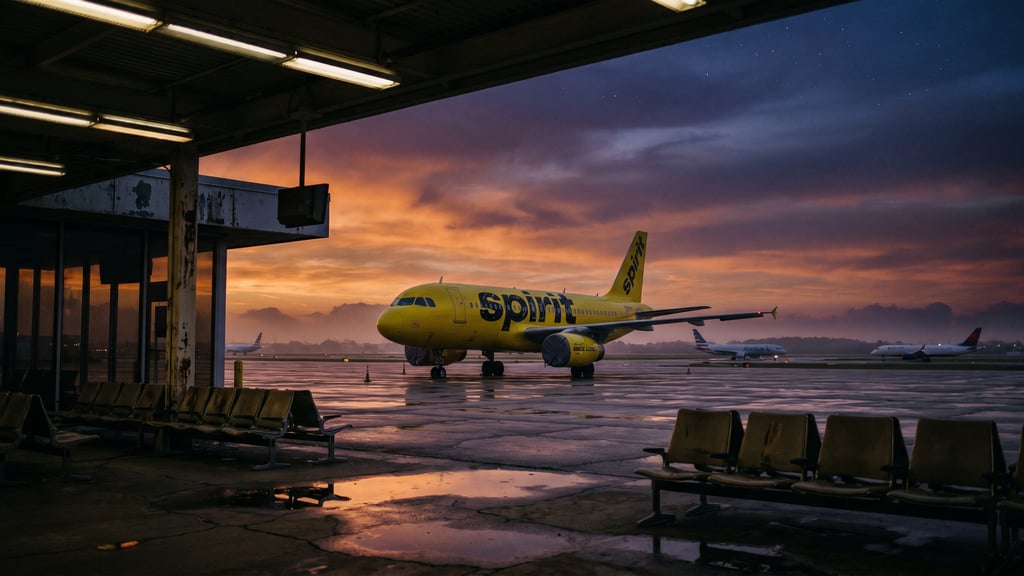
Spirit Airlines: The Rise, Fall, and Legacy of America's Ultra-Low-Cost Pioneer
Meta Description: Spirit Airlines — the budget carrier that reshaped American aviation with bare-bone fares — is now on the brink of shutdown. Explore its full history, business model, bankruptcy struggles, and what its collapse means for travelers and the airline industry in 2026.
Introduction: The End of an Era for Budget Air Travel
On May 1, 2026, Spirit Airlines — the bright-yellow fleet that promised the cheapest seats in the sky — stood hours away from ceasing operations entirely. After two Chapter 11 bankruptcy filings, failed government bailout negotiations, and surging jet fuel prices triggered by geopolitical conflict, the ultra-low-cost carrier (ULCC) that once transformed how Americans fly may be history.
For millions of cost-conscious travelers, Spirit was more than an airline. It was the ticket that made a vacation possible, the affordable connection between family members separated by hundreds of miles. Its story — a spectacular rise, a painful unraveling, and a final desperate scramble for survival — is one of the most dramatic in modern aviation.
What Is Spirit Airlines? A Brief Overview
Spirit Airlines is a Florida-based ultra-low-cost carrier (ULCC) founded in 1990 (originally operating as Charter One as early as 1980). Headquartered in Miramar, Florida, Spirit pioneered the "bare fare" model in the United States — offering rock-bottom base ticket prices while charging separately for nearly every add-on, from carry-on bags to seat selection to boarding passes printed at the airport.
At its peak, Spirit served over 90 destinations across the U.S., Latin America, and the Caribbean. It operated an all-Airbus A320-family fleet and ranked as one of the top ten domestic carriers in the country by available seat miles.
Key Spirit Airlines Facts:
Founded: 1990 (as Charter One Airlines, 1980)
Headquarters: Miramar, Florida
Fleet: Airbus A320neo family
Business Model: Ultra-low-cost carrier (ULCC) with unbundled fares
Stock Ticker (former): SAVE (NYSE, now delisted)
2025 Rank: 8th largest U.S. airline by seats offered
The Spirit Airlines Business Model: Bare Fares and Ancillary Revenue
How the "Bare Fare" Model Works
Spirit's competitive advantage was built on a simple but radical idea: strip everything out of the base ticket price and charge for extras. Under CEO Ben Baldanza, who championed this strategy beginning around 2007, Spirit became the undisputed low-fare leader in U.S. aviation.
The "bare fare" meant passengers paid only for transportation from Point A to Point B. Want to bring a carry-on bag? That costs extra. Want to pick your seat? Fee. Want to check a bag? Fee. Want to print your boarding pass at the airport? Fee. By 2024, ancillary revenue accounted for roughly 50% of Spirit's total revenue.
Why the Model Was Brilliantly Efficient — For a Time
At its height, Spirit's Cost Per Available Seat Mile (CASM) — the key metric for airline unit costs — was 20% lower than Southwest's and dramatically lower than legacy carriers like United Airlines. This allowed Spirit to undercut competitors even at major hub airports like Dallas/Fort Worth and Chicago O'Hare, where business travelers typically kept fares high.
The airline's average total fare (including ancillary revenues) was around $100, compared to $125 for Southwest and $150 for JetBlue — yet Spirit still posted pretax profit margins of up to 21%, exceeding rivals. Its high seat density (cramming roughly 20% more seats than competitors on comparable aircraft) and single fleet type kept operational complexity and maintenance costs low.
For a significant portion of Americans — particularly leisure travelers, lower-income families, and those traveling between mid-size cities — Spirit made flying financially possible for the first time.
Spirit Airlines' Impact on the Entire U.S. Aviation Industry
Perhaps Spirit's most enduring legacy is what it forced the rest of the industry to do.
The Basic Economy Revolution
In 2012, Delta Air Lines became the first legacy carrier to introduce "basic economy" — a direct response to pressure from Spirit and other ULCCs. Other major airlines followed: United, American, and eventually even Southwest adjusted their fare structures. Spirit had essentially forced the entire industry to compete on its terms.
The irony? This competitive response ultimately helped undermine Spirit's own model. When Delta, United, and American began offering basic economy fares with larger networks, better loyalty programs, and more amenities, budget-seeking travelers had new options that didn't feel as penalizing. Spirit's product differentiation eroded.
As airline analyst Robert Mann noted, over the past 15 years, major carriers rolled out cheap travel options that directly competed with ULCCs — and they had the network advantages to back it up.
The Decline: A Perfect Storm of Challenges
Spirit's downfall was not caused by any single event but by a convergence of structural, operational, and macroeconomic pressures.
1. The COVID-19 Pandemic
Spirit, like all airlines, was devastated by the COVID-19 pandemic. Leisure travel — the backbone of its customer base — collapsed. Unlike legacy carriers with more diversified revenue streams (business class, cargo, loyalty programs), Spirit had little cushion. It has been unprofitable ever since travel demand collapsed in 2020.
2. The Shift Toward Upscale Travel Post-Pandemic
Consumer preferences shifted dramatically after the pandemic. Travelers prioritized comfort, flexibility, and reliability — qualities that didn't align with Spirit's stripped-down model. Premium cabin bookings surged at legacy airlines, while the bargain-hunting segment Spirit depended on became increasingly competitive.
3. The Failed JetBlue Merger
In 2022, JetBlue agreed to acquire Spirit in a deal that would have provided a much-needed lifeline. However, the U.S. Department of Justice blocked the merger on antitrust grounds, arguing it would harm competition. The failed acquisition left Spirit stranded with mounting debts and no strategic partner.
4. The Pratt & Whitney Engine Crisis
Beginning in 2023, a global defect in Pratt & Whitney GTF engines — used on Spirit's newer A320neo family aircraft — forced the grounding of dozens of planes. The disruption cost Spirit hundreds of millions in lost revenue and compensation claims, further destabilizing its finances.
5. Rising Competition from Legacy "Basic Economy"
As Delta, United, and American perfected their basic economy products, they increasingly captured Spirit's core customer: the price-sensitive leisure traveler. These passengers could now book with a major carrier for comparable prices but with far better networks and fewer unpleasant surprises.
6. Surging Jet Fuel Prices in 2026
The final blow came from the geopolitical arena. When the U.S. and Israel launched military strikes against Iran on February 28, 2026, jet fuel prices roughly doubled almost overnight. The blockade of the Strait of Hormuz — a critical chokepoint handling approximately 20% of global oil supply — sent fuel costs skyrocketing.
Airlines with pricing power and diversified revenue passed these costs to customers. Spirit, structurally dependent on bargain-hungry flyers, could not. Its margins, already razor-thin, turned catastrophic.
Spirit Airlines' Double Bankruptcy: A Chronology
First Bankruptcy: November 2024
Spirit filed for Chapter 11 bankruptcy protection in November 2024, citing over $3 billion in debt. The court-approved restructuring process kept the airline flying, and its loyalty program continued to operate. But the respite was temporary.
Second Bankruptcy: August 2025
In August 2025, Spirit filed for Chapter 11 a second time — an almost unprecedented situation for a major U.S. carrier. By this point, Spirit had shrunk considerably: it had returned its newest aircraft to lessors, parked over 100 planes, and cut routes across its network.
The Failed $500 Million Government Bailout
In early 2026, Spirit reached what appeared to be a deal with its creditors to emerge from bankruptcy. But when fuel prices spiked after the Iran conflict, the plan collapsed. Spirit turned to the Trump administration, seeking a $500 million federal bailout. President Trump expressed interest — "I'd like to save the jobs" — but negotiations stalled over terms, with a group of creditors opposing conditions that left them with less money.
By May 1, 2026, talks between the administration and Spirit Aviation Holdings had broken down without a deal. The carrier was preparing to cease operations around 3 a.m. ET on Saturday, May 2, 2026.
What Spirit's Shutdown Means for Travelers
Immediate Passenger Impact
Spirit had approximately 9,000 flights scheduled from May 2 through the end of the month — roughly 300 flights and 60,000 potential passengers per day. Travelers holding Spirit tickets were advised:
Do not proactively cancel — wait for an official shutdown announcement
Expect refunds on purchased tickets if the airline ceases operations
Check Spirit's website for official guidance if a shutdown is confirmed
Avoid going to the airport expecting to find Spirit staff in the event of sudden closure
Higher Airfares Across the Industry
The removal of Spirit's roughly 2% of domestic flights will push fares higher industry-wide as travelers compete for fewer available seats. At airports where Spirit was a major player — including Detroit Metro (where Spirit was the No. 2 carrier by flights) and Las Vegas Harry Reid International — the impact will be most acute.
Aviation analysts predict fares will rise most sharply on leisure routes and at smaller or secondary airports where Spirit historically kept prices low through aggressive competition.
Loyalty Program Implications
Spirit's loyalty program, the Free Spirit rewards program, would effectively become worthless in a liquidation scenario. While the program is structured independently of the airline, there would be nowhere to redeem miles or flight vouchers without an airline to operate them.
Other Airlines Stepping In
United Airlines, JetBlue, American Airlines, and Frontier Airlines have all indicated they are prepared to assist Spirit customers and crews. Airlines typically offer some discounted last-minute fares at ticket counters for stranded passengers, though travelers may face higher-than-normal pricing given the surge in demand.
The Broader Implications: Is the ULCC Model Dead?
Spirit's crisis raises fundamental questions about the viability of the ultra-low-cost model in today's aviation environment.
Structural Vulnerabilities
ULCCs are structurally vulnerable in ways that legacy carriers are not. With rock-bottom fares and razor-thin margins, they have almost no buffer to absorb external shocks — whether a pandemic, a fuel price spike, or an engine recall. When costs rise, they cannot simply raise fares without losing their core customers.
Shares of Frontier Airlines — another major ULCC — fell nearly 20% as Spirit's crisis deepened. Ryanair, Europe's budget giant, saw shares drop almost 25% in the same period.
The Demand for Low-Cost Travel Remains
Despite Spirit's failures, the fundamental demand for affordable air travel has not disappeared. Analyst Robert Mann notes there is "an almost insatiable demand for low-fare travel." The question is whether any carrier can profitably serve that demand in an era of high fuel costs and intense competition.
The future may belong to hybrid models — carriers that offer some low-cost seats but maintain enough product differentiation (loyalty programs, route networks, partner agreements) to survive downturns.
Industry Consolidation
Spirit's potential exit accelerates a consolidation trend in U.S. aviation. Fewer airlines mean less competition, which historically translates to higher fares and fewer route options — particularly for leisure travelers who depend on budget options. The irony is that Spirit's demise may undo much of the competitive pressure it spent decades creating.
Spirit Airlines: Key SEO Keywords and Search Trends
For travelers, investors, and aviation enthusiasts searching for information on this rapidly evolving story, the most relevant keywords include:
Spirit Airlines shutdown 2026
Spirit Airlines bankruptcy update
Spirit Airlines flights canceled
Is Spirit Airlines still flying?
Spirit Airlines refund policy
Spirit Airlines government bailout
Budget airline collapse USA
ULCC model viability
Spirit Airlines loyalty program
Spirit Airlines alternatives
What Happens to Spirit's Employees?
Spirit employed approximately 17,000 workers nationwide, including pilots, flight attendants, ground crews, and maintenance technicians. A shutdown would represent one of the larger airline-related job losses in recent U.S. history.
Labor unions representing Spirit workers have urged government support. Other carriers have signaled openness to absorbing some employees — United, American, and others are actively hiring — but seniority, benefits, and pension arrangements complicate the transition.
Spirit maintained a significant maintenance operation at Detroit Metro Airport, with the airline's potential exit creating economic ripple effects well beyond the airport itself.
Conclusion: Spirit's Legacy Will Outlast the Airline
Spirit Airlines may be shutting its doors, but its impact on American aviation is permanent. It democratized air travel for tens of millions of Americans, forced legacy carriers to compete on price in ways they never had before, and pioneered an ancillary revenue model now used industry-wide.
The "bare fare" model Spirit championed was not without its critics — the fees could be confusing, the experience uncomfortable, and the fine print unforgiving. But for a family that couldn't otherwise afford to fly, or a young traveler making their first trip, Spirit was often the only option that made sense financially.
As the airline industry processes the loss of one of its most disruptive players, the lessons of Spirit's story are clear: innovation without resilience is fragile. Low margins require low costs — always. And in a capital-intensive, fuel-dependent industry, external shocks don't discriminate between bold strategies and bad ones.
Spirit Airlines dared to make flying cheap. In the end, it may have been that very daring — stretched to its limits by a world it couldn't control — that brought it down